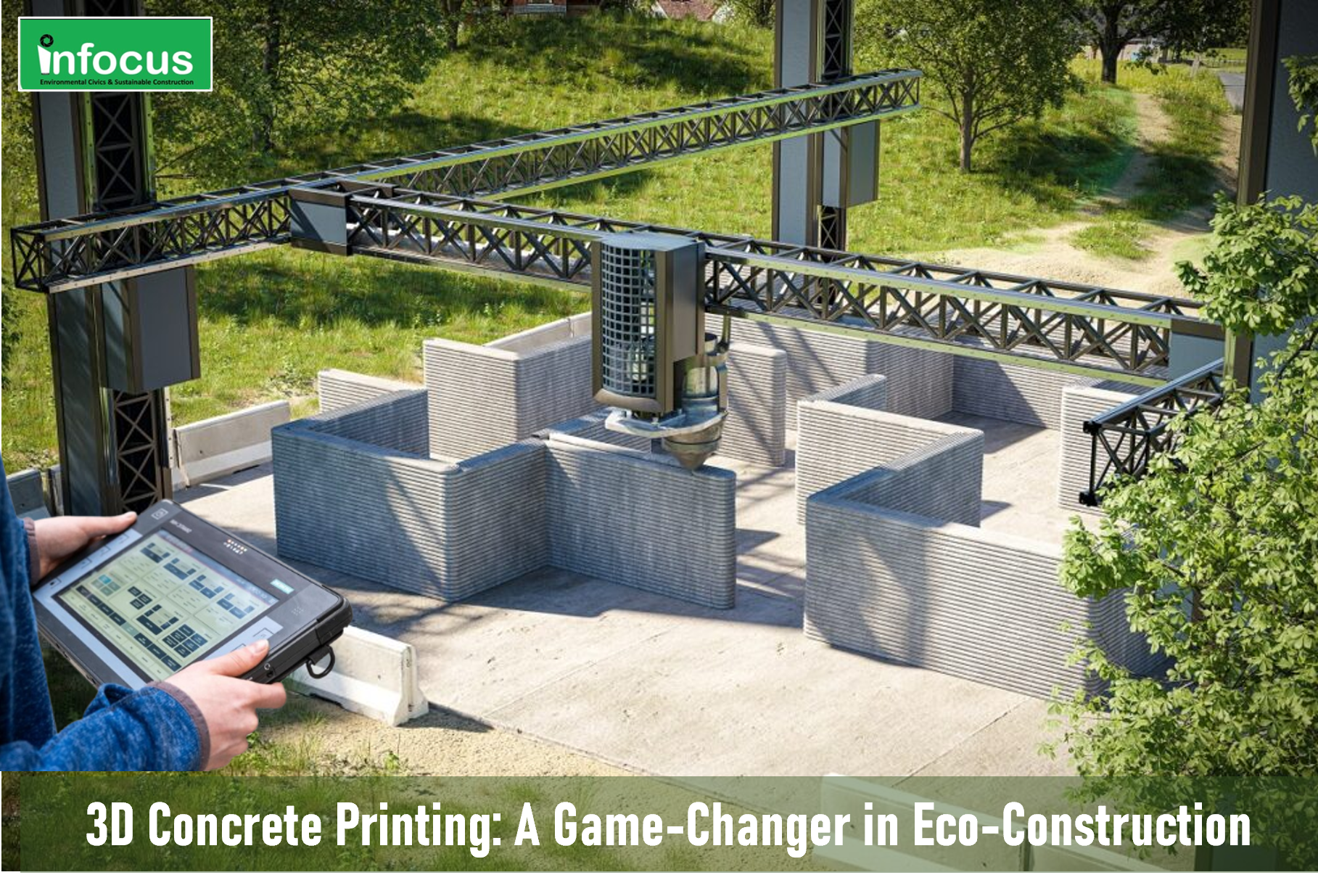
The construction industry, long criticized for its environmental impact and inefficiencies, is undergoing a transformative shift with the emergence of 3D concrete / material printing. As one of the most groundbreaking innovations in modern engineering, this technology is redefining how buildings are designed, constructed, and sustained. By combining automation, precision, and sustainability, 3D concrete printing is quickly establishing itself as a top invention in eco-construction.
3D Concrete Printing;
At its core, 3D concrete printing involves the layer-by-layer deposition of a specially formulated concrete mix using a computer-controlled printer. Unlike traditional construction methods that rely heavily on manual labor, formwork, and material overuse, this technique builds structures directly from digital designs. The result is not only faster construction but also a dramatic reduction in waste and environmental footprint.
As, 3D concrete printing represents a significant leap forward in eco-construction. By reducing waste, lowering emissions, enabling innovative designs, and addressing social needs, it offers a holistic solution to many of the challenges facing the construction industry today.
Edge of 3D Concrete Printing:
- Waste Management: One of the most compelling advantages of 3D concrete printing is its ability to minimize material waste. Conventional construction often generates significant excess due to cutting, shaping, and human error. In contrast, 3D printing uses only the exact amount of material required for each structure. This precision not only conserves resources but also reduces landfill contributions, making it an environmentally responsible alternative.
- Energy efficiency: Energy efficiency is another major benefit. Traditional construction processes are energy-intensive, involving transportation of materials, heavy machinery, and prolonged timelines. 3D printing streamlines these processes by integrating design and construction into a single automated system. Structures can be built on-site with fewer machines and reduced transportation needs, significantly lowering carbon emissions.
- Optimization: Moreover, 3D concrete printing opens the door to innovative architectural designs that were previously difficult or impossible to achieve. Complex geometries, optimized shapes, and lightweight structures can be created with ease, enhancing both aesthetic appeal and functional efficiency. These designs often require less material while maintaining structural integrity, further contributing to sustainability.
- Eco-friendly Alternates: The technology also supports the use of eco-friendly materials. Researchers and engineers are increasingly experimenting with alternative concrete mixes that incorporate recycled materials, industrial by-products, and low-carbon binders. This shift not only reduces reliance on traditional cement—which is a major source of CO₂ emissions—but also promotes circular economy practices within the construction sector.
- Affordability: In addition to environmental benefits, 3D concrete printing addresses critical social challenges. One notable application is in affordable housing. The speed and cost-efficiency of this technology make it possible to construct homes in a fraction of the time and at a significantly lower cost compared to conventional methods. This has immense potential for addressing housing shortages, particularly in developing regions.
- Automation: Labor efficiency is another important factor. The construction industry often faces labor shortages and safety concerns. By automating much of the building process, 3D printing reduces the need for manual labor in hazardous conditions. Workers can instead focus on overseeing operations, improving safety and productivity.
Challenges & Regulations:
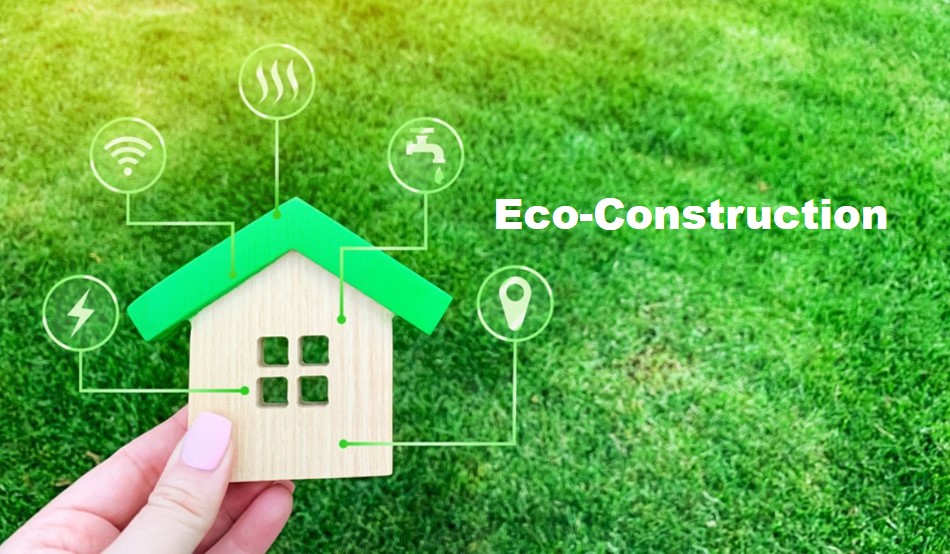
Despite its many advantages, the widespread adoption of 3D concrete printing is not without challenges. Regulatory frameworks, standardization, and initial investment costs remain barriers. However, as technology advances and awareness grows, these obstacles are gradually being addressed.
Looking ahead, the integration of 3D concrete printing with other emerging technologies such as artificial intelligence and smart sensors could further enhance its capabilities. Imagine buildings that are not only sustainably constructed but also intelligent, adaptive, and energy-efficient throughout their lifecycle.
As the world moves toward greener and more sustainable practices, this technology is poised to play a central role in shaping the future of construction.
By
Editorial, Infocus.pk