
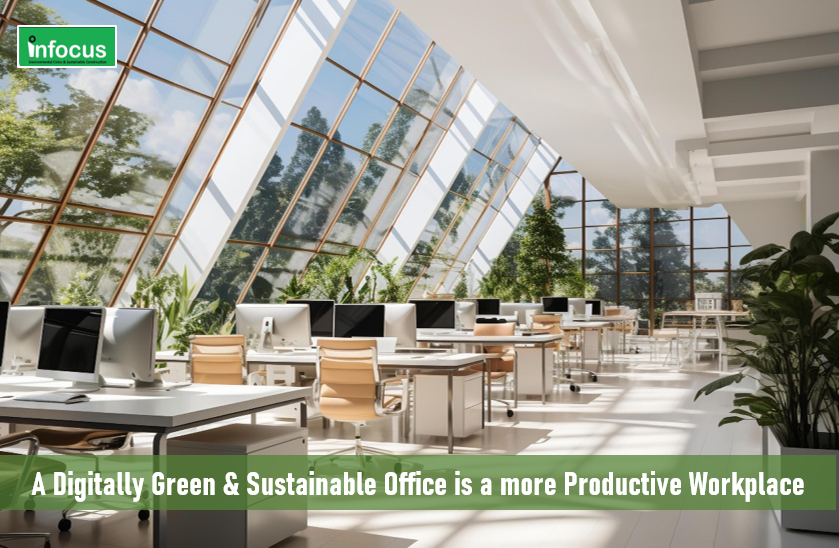
The modern workplace is no longer defined solely by desks, computers, and meeting rooms. In today’s digital economy, productivity depends on how efficiently an office uses technology, energy, and resources. As businesses increasingly embrace digital transformation, creating a digitally green and sustainable office has become a strategic investment rather than merely an environmental initiative. Such workplaces not only reduce operational costs and carbon emissions but also foster healthier, more efficient, and highly productive working environments.
Digitally Green and Sustainable Office:
A digitally green office integrates digital technologies with sustainable practices to minimize environmental impact while maximizing operational efficiency. This includes adopting cloud-based systems, reducing paper consumption, using energy-efficient hardware, implementing smart lighting and climate control, and encouraging responsible digital habits among employees.
Building a digitally green office does not require massive investments overnight. Small steps such as adopting paperless documentation, upgrading to energy-efficient equipment, encouraging responsible digital practices, and using renewable energy where possible can produce measurable improvements over time. Every digital optimization contributes to greater sustainability and operational excellence.
Benefits of Digitally Green Office:
Operational Efficiency:
One of the greatest advantages of a digitally green office is improved operational efficiency. Businesses that replace paper-based processes with digital workflows can complete tasks faster, reduce administrative burdens, and improve collaboration. Cloud storage, electronic document management, digital signatures, and online project management platforms enable employees to access information instantly, whether they are working in the office or remotely. This eliminates delays associated with physical documentation and improves overall workflow.
Energy-efficient Technology:
Energy-efficient technology also contributes significantly to workplace productivity. Modern computers, laptops, monitors, and networking equipment consume less electricity while delivering superior performance. Smart power management systems automatically switch devices into energy-saving mode when not in use, reducing electricity costs without affecting employee performance. Automated LED lighting and intelligent air-conditioning systems further optimize energy consumption while maintaining a comfortable working environment that enhances employee concentration and well-being.
Healthier Workplace:
A sustainable office also creates a healthier workplace. Reduced paper usage minimizes clutter, making workspaces more organized and easier to manage. Better indoor lighting, improved ventilation, and optimized temperature control contribute to employee comfort, reducing fatigue and improving focus throughout the working day. Numerous studies have shown that employees perform better in clean, organized, and environmentally conscious workplaces where they feel their employer values both sustainability and employee welfare.
Digital Collaboration:
Digital collaboration tools further strengthen productivity. Video conferencing, shared workspaces, instant messaging platforms, and cloud-based collaboration software enable teams to communicate seamlessly regardless of their physical location. These technologies reduce unnecessary travel, shorten decision-making cycles, and allow projects to move forward more quickly. Businesses also benefit from reduced transportation costs and lower carbon emissions.
Sustainable Development:
Sustainability also strengthens business resilience. Companies that reduce electricity consumption, optimize resource utilization, and embrace digital processes are better positioned to withstand rising energy costs and changing environmental regulations. Lower operating expenses allow organizations to invest more in employee development, innovation, and customer service, creating a positive cycle of growth and competitiveness.
Corporate Reputation:
Moreover, clients, investors, and business partners increasingly prefer organizations that demonstrate genuine commitment to environmental responsibility. A digitally green office enhances corporate reputation and reflects a forward-thinking organizational culture. Employees are also more likely to feel proud working for an environmentally responsible organization, improving morale, engagement, and staff retention.
In an era where environmental responsibility and digital transformation go hand in hand, organizations that embrace digitally green workplaces gain more than reduced carbon emissions. They achieve higher productivity, lower operational costs, stronger employee satisfaction, and enhanced competitiveness. A digitally green and sustainable office is no longer simply an eco-friendly choice—it is a smarter, more productive way to do business and a blueprint for the workplace of the future.
By
Editorial, Infocus.pk