
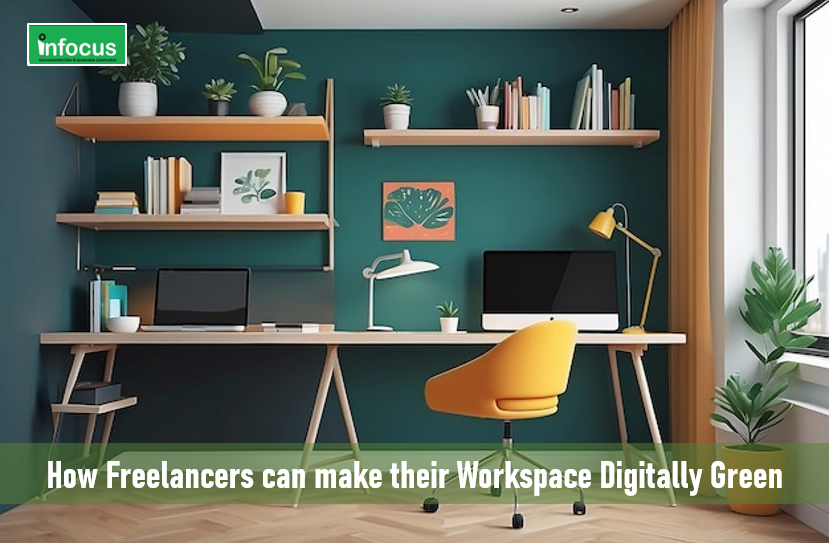
Freelancing has become one of the fastest-growing career choices worldwide, allowing professionals to work from home, co-working spaces, or even while travelling. While freelancers often consider themselves environmentally friendly because they avoid daily commuting, the digital tools they rely on also consume energy. Laptops, cloud storage, internet infrastructure, video conferencing, and data centres all contribute to carbon emissions. By adopting digitally green practices, freelancers can reduce their environmental footprint while also saving money and improving productivity. For that they need to make their Workspace Digitally Green.
Making Your Workspace Digitally Green:
A digitally green workspace is not about making dramatic lifestyle changes; it is about adopting smarter, more sustainable digital habits. By choosing energy-efficient devices, reducing digital waste, embracing responsible cloud usage, minimizing unnecessary online activity, and optimizing energy consumption, freelancers can lower their environmental impact while improving operational efficiency. As the global freelance economy continues to expand, every freelancer has an opportunity to contribute to a cleaner, more sustainable digital future. Small actions taken today can collectively create a significant positive impact for both the environment and the digital economy.
Fundamentals for a Digitally Green Workspace:
Here are some fundamentals to transform your desk into digitally green workplace;
- Choose Energy-Efficient Devices:
The foundation of a digitally green workspace begins with selecting energy-efficient equipment. Modern laptops generally consume significantly less electricity than desktop computers, making them a better option for most freelancers. Choosing devices with recognized energy-efficiency certifications and replacing outdated hardware with modern, power-saving models can substantially reduce electricity consumption.
Freelancers should also activate power-saving settings, lower screen brightness, and enable automatic sleep mode when devices remain idle. These small adjustments can collectively save a considerable amount of energy throughout the year.
- Reduce Digital Waste:
Digital clutter is often overlooked, yet it has a real environmental impact. Every unnecessary file stored in the cloud occupies space in data centres that require electricity for storage and cooling. Freelancers can make their workspace greener by regularly deleting duplicate files, outdated documents, and unused software.
Organising files efficiently also improves productivity by making important information easier to locate. Compressing large files before sharing and using links instead of repeatedly sending bulky email attachments further minimizes digital storage requirements and network traffic.
- Embrace Sustainable Cloud Practices:
Cloud computing has transformed freelance work, but responsible cloud usage matters. Instead of maintaining multiple copies of the same project across different platforms, freelancers should centralize their storage and periodically archive completed work. Selecting reputable cloud service providers that invest in renewable energy and energy-efficient data centres can further reduce the environmental impact of digital operations.
- Limit Unnecessary Online Activity:
Video conferencing has become an essential part of freelancing, but high-definition video calls consume more bandwidth and energy than audio-only communication. When video is unnecessary, switching to voice calls can significantly reduce data usage. Similarly, disabling unnecessary background applications, limiting automatic cloud synchronisation, and reducing excessive streaming during work hours help conserve energy.
- Go Paperless:
Digital documentation is one of the easiest ways for freelancers to adopt environmentally responsible practices. Using electronic contracts, digital invoices, e-signatures, cloud-based collaboration tools, and online project management platforms reduces paper consumption while improving workflow efficiency. Clients increasingly appreciate digital documentation because it is faster, searchable, and easier to archive.
- Power Your Workspace Responsibly:
A digitally green workspace extends beyond computers. Using LED lighting, maximizing natural daylight, unplugging chargers when not in use, and switching off peripherals such as printers and monitors at the end of the workday all contribute to lower energy consumption. Freelancers who have access to rooftop solar systems or renewable energy suppliers can further reduce the carbon footprint of their home offices.
- Build Sustainable Digital Habits:
Technology alone cannot create a green workspace—daily habits matter equally. Scheduling device updates during off-peak hours, repairing equipment instead of replacing it prematurely, recycling electronic waste responsibly, and purchasing refurbished hardware whenever practical all support sustainable digital practices.
By
Editorial, Infocus.pk