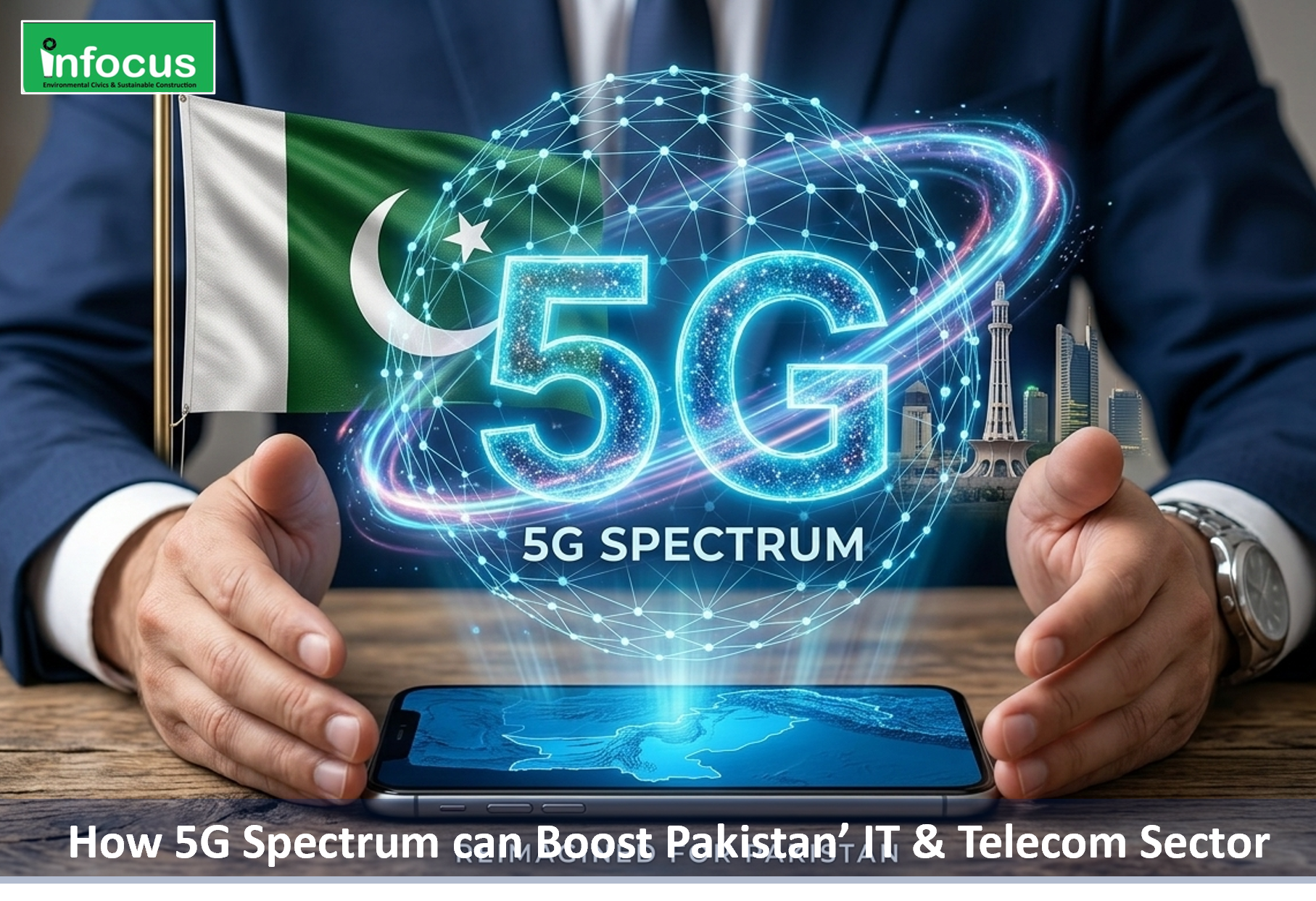
On March 10, 2026 Pakistan successfully concluded its 5G spectrum auction, raising $507 million by selling 480 MHz of spectrum to three leading mobile operators. The auction aimed to upgrade digital infrastructure with 4G expansion and 5G deployment in major cities. Now the arrival of 5G Spectrum technology represents a transformative opportunity for Pakistan’s IT and telecom sectors. While still in early stages of rollout, 5G is more than just faster internet—it is a foundational technology that can reshape the country’s digital economy, accelerate innovation, and enhance global competitiveness.
5G Spectrum Technology;
5G spectrum technology refers to the specific radio frequency bands used to transmit 5G data. It is critical infrastructure for high-speed connectivity, driving industrial digital transformation through massive capacity and low latency. With its arrival in Pakistan, 5G is poised to revolutionize country’s IT and telecom sector by offering speeds up to 100 times faster than 4G, low latency, and massive connectivity, fostering advancements in AI, IoT, and cloud computing. It would also catalyze IT exports, enhance freelancing capabilities, and support smart industries, telemedicine, and e-governance.
5G Spectrum in Pakistan;
With its effective implementation it is believed, the 5G could become a game-changer—positioning Pakistan as a rising digital hub in the global technology landscape. Telecom experts say the rollout of 5G in Pakistan could increase internet speeds by three to five times, significantly improving user experience and easing network congestion. The technology could also expand access to high-speed internet via fixed wireless access, reducing reliance on fiber infrastructure.
However, its success depends on strategic policymaking, affordable access, and coordinated efforts between government and industry stakeholders. With only around 5 million users currently have 5G-enabled devices, broader deployment is required to benefit existing users as well through better spectrum allocation. Besides, its greater benefits are further entailed with strengthening fiber connectivity and improving 5G-enabled device availability.
Key Benefits of 5G Spectrum Technology;
Notwithstanding, 5G in Pakistan is not just about faster mobile internet; it is a critical step towards building a robust, modern digital ecosystem and accelerating economic growth. With intensifying data consumption and mounting demand from Pakistan’s IT and freelance sectors, improved connectivity could enhance productivity, enable real-time collaboration, and support the development of smart home and smart city technologies.
Here are some key benefits:
1. Supercharged Internet Speeds and Connectivity: At its core, 5G offers ultra-fast speeds, low latency, and massive network capacity. This means smoother video streaming, faster downloads, and real-time communication with minimal delay. These capabilities significantly improve user experience and enable businesses to operate more efficiently.
For Pakistan, where internet quality often limits productivity, 5G can bridge connectivity gaps and expand reliable access across urban and rural areas. Enhanced connectivity can also help bring millions of unconnected users into the digital ecosystem, strengthening the telecom sector’s subscriber base.
2. Boost to IT Exports and Freelancing Economy: Pakistan’s IT sector is one of its fastest-growing industries, with exports rising steadily. 5G can act as a catalyst by enabling software houses and freelancers to handle data-intensive projects with ease.
With ultra-low latency, Pakistani developers can collaborate seamlessly with global clients in real time, improving delivery efficiency and service quality. Industry experts believe that 5G will allow local firms to integrate more effectively into global supply chains, directly contributing to increased IT exports. Additionally, Pakistan’s large freelance workforce—already among the world’s top contributors—will benefit from faster uploads, smoother video calls, and reliable cloud access.
3. Enabling Emerging Technologies: 5G serves as the backbone for next-generation technologies such as Artificial Intelligence (AI), the Internet of Things (IoT), augmented reality (AR), and smart city solutions. In Pakistan, this can unlock innovation across multiple sectors:
a. Healthcare: Remote surgeries and telemedicine
b. Education: Virtual classrooms and immersive learning
c. Agriculture: Smart farming using IoT sensors
d. Urban Development: Smart traffic systems and energy management
These advancements can create new IT sub-sectors, startups, and investment opportunities, strengthening the digital economy.
4. Growth of Telecom Infrastructure and Investment: The rollout of 5G requires significant investment in infrastructure, including towers, fiber networks, and spectrum acquisition. This creates opportunities for telecom companies, equipment providers, and local manufacturers.
Pakistan’s growing mobile manufacturing industry can also benefit. With increased demand for 5G-enabled devices, local assembly plants may expand production, improving industrial output and job creation. Moreover, infrastructure expansion will improve overall network quality, benefiting both 4G and future technologies.
5. Job Creation and Digital Entrepreneurship: 5G will open doors to new business models and digital services. From app development to cloud computing and cybersecurity, demand for skilled professionals will increase.
Startups can leverage 5G to build innovative solutions in fintech, e-commerce, health tech, and edtech. This can foster entrepreneurship and reduce unemployment by creating high-value jobs in the tech sector.
6. Strengthening Pakistan’s Global Competitiveness: Countries that adopt 5G early gain a competitive edge in the global digital economy. For Pakistan, timely deployment can help it compete with regional players like India and Bangladesh.
Reliable, high-speed connectivity will make Pakistan a more attractive destination for foreign investment, outsourcing, and tech partnerships. It can also support government initiatives like “Digital Pakistan,” driving long-term economic growth.
By
Editorial, Infocus.pk